Showing posts with label pewee valley. Show all posts

Tuesday, August 31, 2010

Pee Wee


I've always wondered about the nickname "Pee Wee" - from whence did it come, and with what was it associated?

One of baseball's all-time greats, Pee Wee Reese, was born in Ekron, KY (Meade County) in 1918 and was living in Louisville at the time of his death on August 14, 1999.

Just two days later, on August 16, 1999, the country music star Pee Wee King, also living in Louisville, also died.

King was best known for "You Belong To Me" (you know the song - "Seeeee the pyramids alonggggg the Niiiiiile....") He also wrote "The Tennessee Waltz" in an attempt to capitalize on Bill Monroe's success with "The Kentucky Waltz", but he also had many great Country and Western Swing songs over the years such as "Dragnet", "Slow Poke", "Why Don't Y'all Go Home?" and "Unbreakable Heart".


And then there's bluesman Pee Wee Crayton, and of course, that Pee-wee Herman guy. And growing up, I read Richie Rich comics, which had a character named Pee Wee. I also used to know a bonafide Kentucky Pee Wee: back in the 90s when I had antique-mall booths all over central Kentucky, I knew a fellow known only as "Pee Wee" who dealt in antique tools, hardware, coins, locks, and railroadiana.

But what is the etymology of the term "Pee Wee"? Why are these two syllables historically applied to children, or to people who are short in stature? (And many of the people with the nickname aren't even short at all.) According to the dictionary, Pee Wee means "One, such as a child, that is relatively or unusually small", and notes that it's probably a variant of "wee", meaning tiny.

It also suggests that "Pee Wee" is related to "Pewee", which is a type of bird. (Oddly, though, their own description refers to Pewees as "small" and as "large" in the exact same entry!)


Which brings us right back to Kentucky again - the city of Pewee Valley (the setting of the old "Little Colonel" books) in Oldham County is named after that bird. Apparently it was omnipresent enough here that the city's founders gave it that name, although no one's sure how "valley" got into it - the city is actually built on a crest, not a valley.

Monday, April 12, 2010

The Little Colonel


All but forgotten now except to historians, classic film buffs, and a few other people in the know, is the Victorian-age meme of the "Little Colonel".

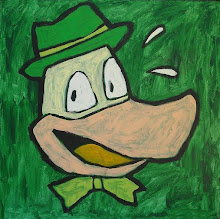
There's a theatre company in Pewee Valley (just outside Louisville) called the Little Colonel Players; perhaps you've seen their logo with an odd little character in a Napoleonic hat. But from whence did this concept originate?

Annie Fellows Johnston wrote a series of novels dealing with the aristocracy in a small southern town. These were semi-biographical and based on actual local people and places. The stories were set in Lloydsborough Valley, which was actually a fictionalized version of Pewee Valley. Johnston, originally from Indiana, eventually made Pewee Valley her home, and she died there in 1931.


Among the books in the "Little Colonel" series: The Little Colonel in Arizona, The Little Colonel: Maid of Honor, The Little Colonel's Christmas Vacation, The Little Colonel's Hero, The Little Colonel's House Party, The Little Colonel's Holiday, The Little Colonel at Boarding School, Little Colonel's Knight Comes Riding, and The Little Colonel's Chum, Mary Ware. (From that last one, she spun off a popular series of "Mary Ware" books.) Other books in her decidedly dated oeuvre include Miss Santa Clause of the Pullman, The Rescue of the Princess Winsome, Georgina of the Rainbows, It was the Road to Jericho, Mildred's Inheritance, and Ole Mammy's Torment.

In 1935 a film adaptation was made, starring Shirley Temple and Lionel Barrymore. And after that, Johnston and her beloved characters seemed to vanish down the memory hole. Lists of popular Kentucky authors - even specifically lists of ones from the Victorian age - often omit Johnston and her "Little Colonel" books.


In the stories, the Little Colonel (a young girl), draws inspiration from "The Old Colonel" (a Southern Gentleman who had lost his arm in the Civil War):

"Along this street one summer morning, nearly thirty years ago, came stepping an old Confederate Colonel. Every one greeted him deferentially. He was always pointed out to new comers. Some people called attention to him because he had given his right arm to the lost cause, some because they thought he resembled Napoleon, and others because they had some amusing tale to tell of his eccentricities. He was always clad in white duck in the summer, and was wrapped in a picturesque military cape in the winter."


The Old Colonel was a thinly-veiled dramatization of one George Washington Weissinger, Jr., a well-known lawyer in Louisville and Middletown. He's buried in Cave Hill Cemetery, but visiting his grave is tricky. According to littlecolonel.com:

Cave Hill Cemetery (the most prestigious burial ground in the region) has records that the Old Colonel was buried on February 25, 1903, his wife two months later. A plot map shows the exact location of the graves. But there are no tombstones or grave markers. Why? We don't know. We also can find nothing about the death of Amelia Pearce Weissinger (born Amelia Neville Pearce), his wife, just before her interment beside him on April 30, 1903.


And David Domine, in his great book Haunts of Old Louisville, reports sightings of an elderly one-armed ghost in a Civil War uniform, fitting the Old Colonel's description perfectly.

Saturday, January 16, 2010

Night of January 16th


The play Night of January 16th by Ayn Rand is currently being staged at the Little Colonel Playhouse in Pewee Valley, KY.

What's so unusual about that? Well, the story is a courtroom drama which is very loosely based on the untimely and mysterious death of Ivar Kreuger, a wealthy industrialist who at one time controlled two-thirds of the world's matchstick supply. The audience participates in the story, acting as the jury and voting on the verdict, which literally determines the direction of the play they are watching. The play has two different endings, depending on whether the jury finds the defendant guilty or not guilty.

Despite Rand's popularity as the founder of the Objectivist movement, the play is seldom staged.


You have five chances to left to see the show. Three evening shows: January 16, 22 and 23 at 8:00pm, and two afternoon shows: January 16 and 23 at 2:30pm. You can read Keith Waits' review for Theatre Louisville by clicking here.